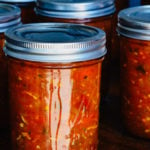
Sweet Smokey Zucchini Salsa Recipe
Fresh garden tomatoes and zucchini combine forces to make this sweet and smokey zucchini salsa. Sure to become your new favorite condiment! Makes 26 pints, about 8 servings per pint.
Ingredients
- 30 cups peeled shredded zucchini
- 12 small onions, shredded (6 large)
- 6 green bell peppers, chopped or shredded
- 6 red bell peppers, chopped or shredded
- ¾ cup pickling salt
- 3 Tablespoons dry mustard
- 3 Tablespoons garlic powder
- 3 Tablespoons cumin
- 2 Tablespoons red chili powder
- 3 Tablespoons Liquid Smoke
- 6 cups white vinegar
- 2 ¼ cups brown sugar
- 2 cups cilantro, chopped
- 10-15 jalapeno peppers, chopped
- 3 tsp. ground black pepper
- 15-20 cups chopped ripe tomatoes, leave skins on
- 3-4 Tablespoons cornstarch
- 3 12 oz. cans tomato paste
Equipment
- Food processor (I use my Cuisinart food process all the time)
- Large bowl (I like that this set includes several sizes)
- Large pot (Le Creuset pots are so great)
- Mason jars (Use these glass jars for storing dry goods, too)
- Hot water canner (This is a classic canner that's easy to use)
Instructions
- Day ONE: Combine the first 5 ingredients in a large mixing bowl. Mix well and let stand overnight in the refrigerator.
- Day TWO: Rinse and drain the zucchini and onion mixture well.
- Put into a large pot with all other ingredients.
- Bring to a boil; simmer for 15 minutes.
- Pour mixture into hot jars and process 15 minutes in a boiling water bath canner.
Notes
A delicious treat to can in the summertime and give the gift of your harvest away in pint-size jars for the holidays! YIELDS about 26 pints of salsa.
There's lots of debate regarding whether you need to pressure can or just use water bath for canning salsa. Because this recipe has vinegar and canning salt, it adds enough preservative and brings up the acidity level to the point where pressure processing is not necessary. My recommendation for any canning is that you need to research yourself what is best for each recipe and the ingredients involved though! Please refer your safe or not safe questions to the National Center for Home Food Preservation.
Sandy’s tips:
- Storage: Unopened, sealed salsa can be stored in a cool, dark, and dry place for up to 12 to 18 months, but it will remain safe to eat for up to 2-3 years as long as the seal remains intact. Once opened, store in the fridge for up to 2 weeks.
- Freeze: For longer storage, pour the salsa into freezer-safe containers and freeze it for up to 6 months.
- Avoid skin irritation: Wear gloves when handling the jalapeños and make sure not to touch your eyes!
- Canning safety: When canning your zucchini salsa, it’s critical to follow a tested recipe. Do not alter the proportions of ingredients, especially the number of tomatoes, onions, or peppers, as this can affect the pH and safety of the product. Also, the acid (vinegar) is essential. Incorrectly canned salsa can pose a risk of botulism poisoning.
- Leave space in the jar: Leave 1/2-inch headspace when ladling the salsa into the jars. Headspace is the crucial air gap that allows food to expand and create a proper vacuum seal during processing, while also ensuring enough heat penetrates the jar to kill bacteria. Too little causes messy seal failures, and too much leaves excess air that prevents a strong vacuum.
Nutrition Facts
Calories: 28kcal, Carbohydrates: 6g, Protein: 1g, Fat: 0.2g, Saturated Fat: 0.04g, Polyunsaturated Fat: 0.1g, Monounsaturated Fat: 0.05g, Sodium: 428mg, Potassium: 162mg, Fiber: 1g, Sugar: 5g, Vitamin A: 325IU, Vitamin C: 16mg, Calcium: 16mg, Iron: 0.4mg